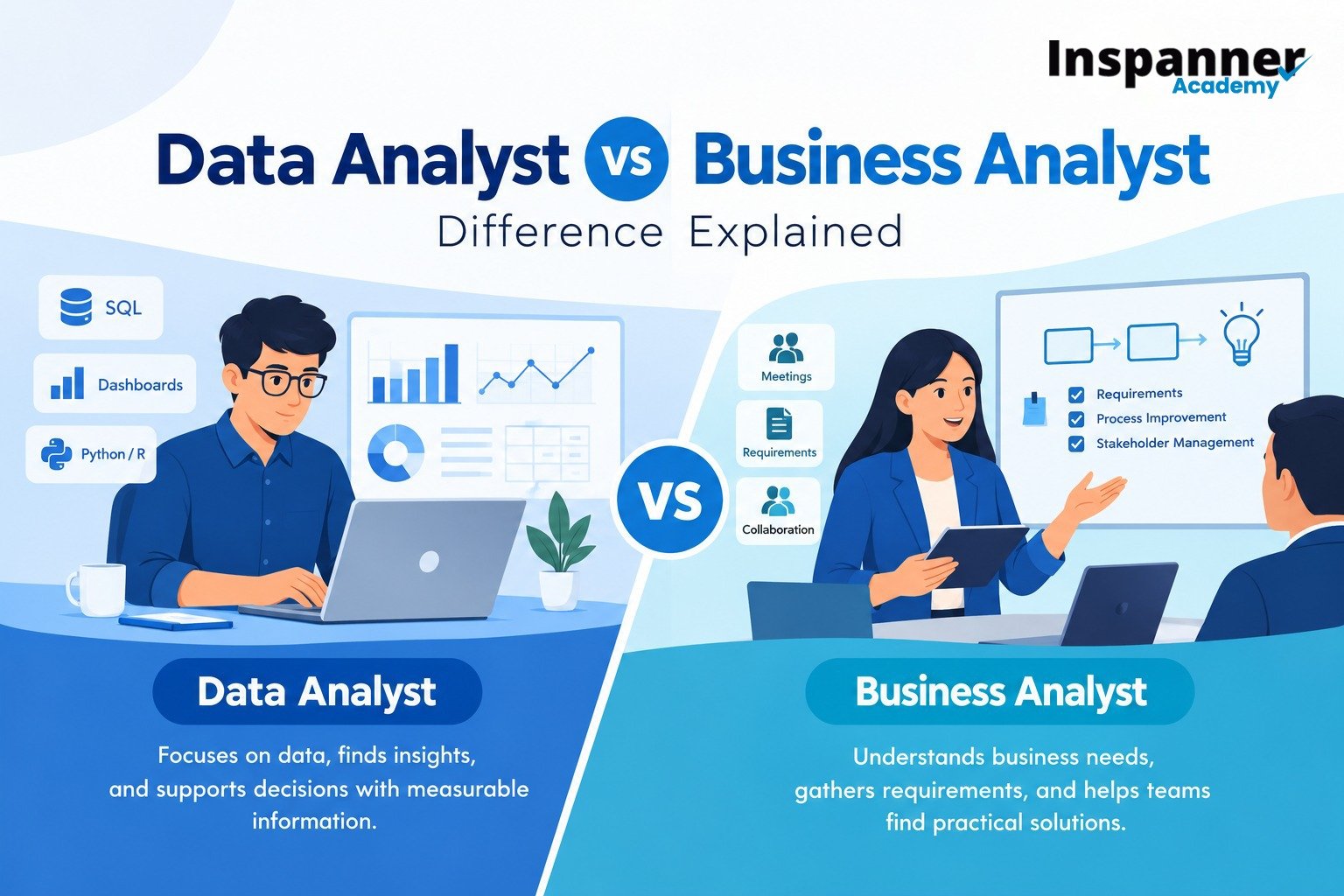
Data Analyst vs Business Analyst: Difference Explained
Sep 12, 2026


Choosing a career between data analytics vs data science can be confusing because both fields involve working with data, identifying useful insights and helping businesses make informed decisions. Data analytics mainly focuses on understanding existing data through reports, dashboards and trends, while data science goes further into programming, statistics, machine learning and predictive models. Understanding these differences can help students compare the skills, technical depth and type of work involved before choosing the path that matches their career goals.
Data analytics is the process of examining existing data to find patterns, trends and useful insights. Businesses use these insights to understand performance, identify problems and support decisions.
A data analyst may clean data, compare results, create reports and build dashboards. Common tools include Excel, SQL, Power BI and Tableau. Python can also be useful, but advanced programming is not always required for beginner roles.
Data science uses programming, statistics and analytical methods to study complex data and build models. It may involve predicting outcomes, identifying patterns or creating systems that learn from data.
Data scientists commonly use Python or R, SQL, Jupyter Notebook and machine learning libraries. Their work often requires a stronger understanding of statistics, mathematics and programming than typical analytics roles.
The main differences become clearer when the two fields are compared by daily work, tools and technical requirements.
This is why data science vs data analytics should not be viewed as a simple choice between a basic and an advanced field. They solve different problems and lead to different types of work.
The data analyst vs data scientist differentiation becomes clearer when you look at how their work supports decision-making. A data analyst usually turns raw information into clear findings that teams can use to understand performance, identify issues and plan the next steps.
A data scientist often works on more complex problems where past data is used to identify patterns, test possible outcomes and build predictive models. This makes the role more focused on deeper analysis, creative thinking and technical problem-solving.
The data analytics career scope extends across sectors such as banking, retail, healthcare, e-commerce, technology and consulting, where teams rely on data to understand performance and make informed decisions. Beginners may explore roles such as data analyst, reporting analyst, business intelligence analyst or operations analyst depending on their skills and interests.
As professionals gain experience, they can move into areas such as business intelligence, product analytics, marketing analytics or senior analytical positions. Building a data analytics career also involves developing stronger business understanding, communication skills and the ability to explain findings clearly to different teams.
The data science career scope includes opportunities in areas where businesses use large or complex datasets to improve forecasting, automate processes and solve technical problems. Common roles may include junior data scientist, data scientist, machine learning analyst and applied AI professional.
As experience grows, professionals can move into specialized areas such as machine learning, artificial intelligence, predictive analytics or data-driven product development. A data science career can suit people who want to work on deeper technical problems and continue building expertise in advanced analytical methods.
For freshers, the choice should depend on current skills and learning interests rather than popularity. Analytics may feel more approachable if you are comfortable with spreadsheets, basic statistics and business problem-solving but have limited coding experience. Data science may suit you if you enjoy programming, mathematics and technical problem-solving.
Educational background can influence how quickly you understand certain concepts, but it does not define your career path. Beginners from non-technical backgrounds can build analytics skills step by step, while those familiar with mathematics, statistics or programming may find data science easier to explore. Training institutes such as Inspanner Academy can also help students understand the practical skills involved before choosing a suitable learning path.
A data analytics course can help you learn Excel, SQL, data cleaning, dashboards, visualization and basic statistics. It may suit beginners who want to understand business data before moving into more technical areas.
A data science course usually includes programming, statistics, data preparation, machine learning and model evaluation. It may suit learners who are comfortable with coding or ready to build stronger technical foundations.
Before enrolling, review the syllabus, projects, tools and prerequisites. Practical learning should be part of the course.
A data analytics vs. data science career decision becomes easier when you compare your interests with the work expected in each role.
Choose analytics if you enjoy dashboards, reports, business questions and presenting insights.
Consider data science if you enjoy coding, statistics, experimentation and predictive models.
Start with analytics if you want a more gradual introduction to working with data.
Explore data science if you are ready to develop stronger programming and mathematical skills.
Read entry-level job descriptions to understand the tools and skills employers commonly request.
Your choice should also reflect how much time you can give to learning and the type of work you want to pursue.
There is no single answer to which career is better. Data analytics can be more suitable for learners interested in business insights, reporting and working with data to support decisions, while data science usually involves deeper programming, mathematics and machine learning.
If you are comparing a data analytics course with a data science course, focus on the curriculum, hands-on learning and how well the course matches your interests and future plans. If you want to explore structured learning in this field, Inspanner Academy offers guided training designed to help you build relevant skills and choose a suitable career direction.
1. Is Data Analytics or Data Science better for beginners?
Data analytics is often easier to start because beginners can first learn Excel, SQL, dashboards and basic statistics. Data science usually requires stronger programming, mathematics and machine learning knowledge.
2. Which field requires more coding?
Data science generally requires more coding because professionals may build models and work with machine learning. Data analytics often uses SQL and may use Python, but many beginner tasks rely on spreadsheets and visualization tools.
3. Can a fresher start a data analytics career?
Yes, freshers can begin by learning spreadsheets, SQL, basic statistics and visualization tools such as Power BI or Tableau. Practical projects can help them apply these skills, while training institutes such as Inspanner Academy can provide structured learning and hands-on practice for those starting a data analytics career.
4. What skills are needed for a data science career?
Useful skills include Python or R, SQL, statistics, data cleaning, machine learning and problem-solving. Communication is also important for explaining technical findings clearly.
5. How can I decide between data analytics and data science?
Compare your interest in coding, mathematics, business analysis and predictive modeling. Analytics may suit people who prefer reports and business insights, while data science may suit those who enjoy programming and technical modeling.
.png)

